

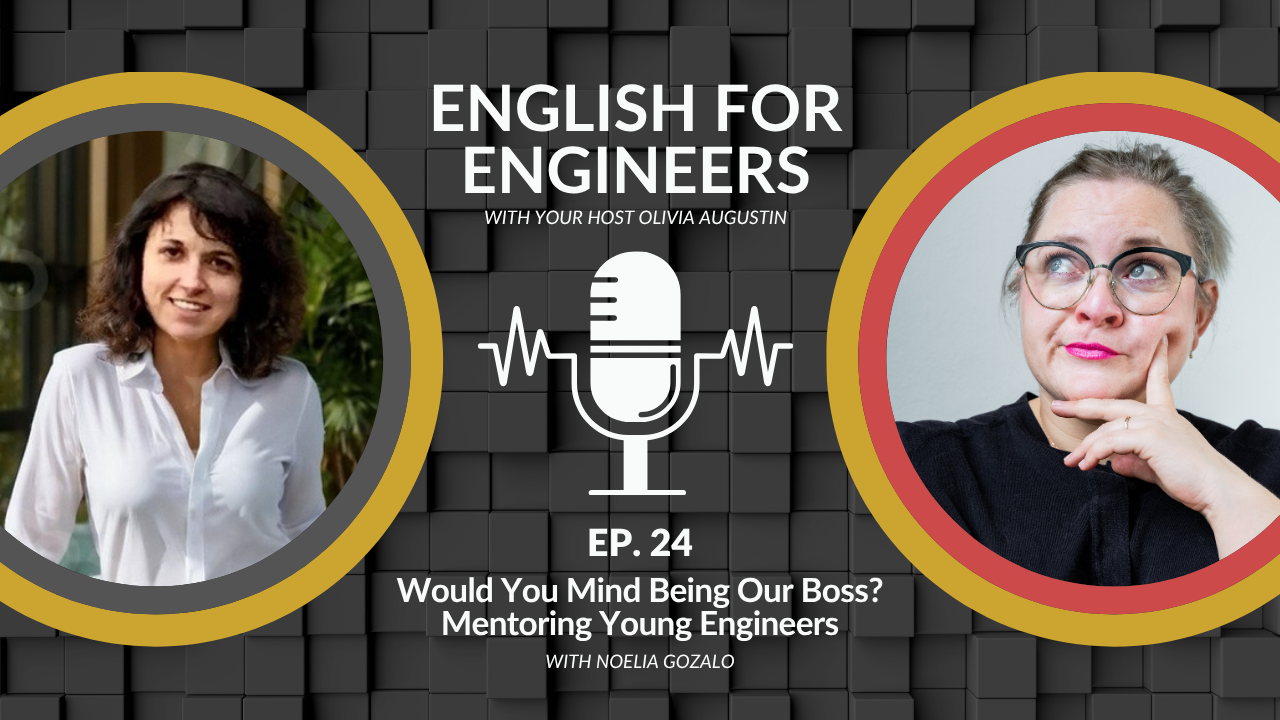
Nobody hands you a mentor. Noelia Gozalo worked out her first engineering years alone, and she calls that the hard way.
Noelia is an engineer with more than 10 years of experience in automotive and renewable energy. She has worked with Nissan, Renault, AVL and GE Renewables, and she now leads cross-functional teams in fast-moving environments. On weekends, she mentors young engineers and gives free talks to final-year students at her local university in Spain.
She got into it almost by accident. A few years ago, she led a team of eleven graduates and noticed she was spending her weekends preparing material for their one-on-ones. Then a team leader went on long leave, and she volunteered to cover. A month later, one of her team members asked her whether she would mind being their boss.
That question is where this episode starts.
We also go back to Ireland in 2010, where Noelia arrived with the exams passed and the grammar solid, and could not follow a single lecture. She set herself one rule: no Spanish, no exceptions. Her classmates thought she was strange for avoiding the Spanish students. She is still proud of it.
What you'll learn in this episode
Mentoring young engineers matters most in the years when almost nothing you struggle with is technical. Speaking up, reporting to leadership, staying visible to a manager: nobody teaches you any of it. You can work it out alone, and plenty of engineers do. It takes years longer that way.
Both, for different reasons. Other non-native speakers make mistakes too, so you relax and you talk more. That builds fluency. Native speakers hear pronunciation errors your international colleagues cannot catch. Use both and you cover the whole problem.
Lead with empathy. A colleague with limited English can sound blunt without meaning to, so read the intent behind the wording. Give people realistic deadlines as well. If you mark everything urgent, your team stops believing the word. And this starts at the top: leaders model it first, or nobody follows.
Remember that they hired you because you can do the job. Reporting to managers and VPs makes most junior engineers nervous, and it is usually imposter syndrome rather than a skills gap. More technical preparation will not fix it. Communication is a job skill you build on the job.
Many degrees still train engineers as individuals. Programmes with real group projects give graduates a clear head start in their first job. It counts at the hiring stage too. Some graduate assessment days put five candidates in a room to solve a problem while HR watches who leads, who stays quiet and who takes criticism well.
Resources and Links
- Why Logic Alone Can't Hold Your Team Together — more on empathy in international teams
- Why You Can't Understand Native English Speakers — the listening problem Noelia hit in Ireland
- Fluent on Paper, Stuck in the Room — on freezing up in meetings
- Unstuck Your English — free guide
Connect with Noelia Gozalo
Noelia Gozalo is an engineer with more than ten years in automotive and renewable energy, and she mentors young engineers through the first years of their careers. LinkedIn
Connect with Olivia Augustin
Olivia Augustin is a civil engineer and certified English as a 2nd language and Business English teacher. With her one-on-one lessons and group courses, she teaches non-native English-speaking engineers the kind of English that gets the job done.
0 Comments