

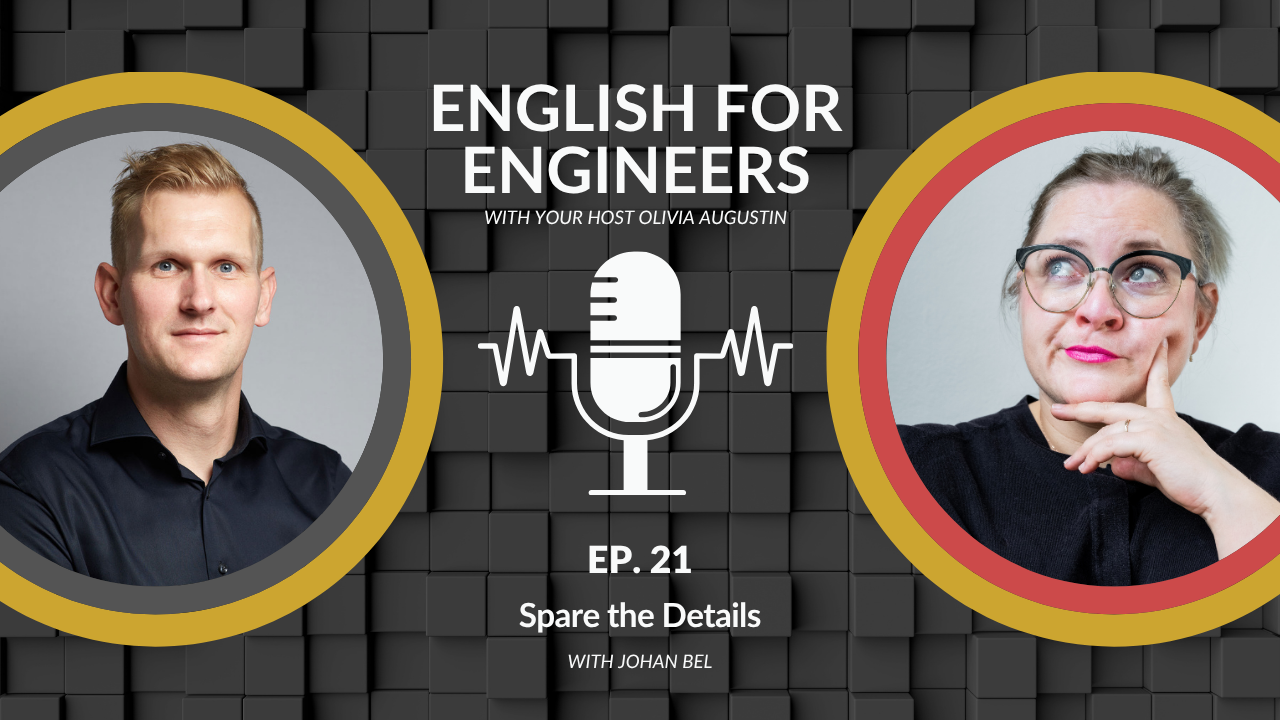
Most engineers do not lose time on the technical problem. They lose it on the explanation.
Johan Bel knows that pattern well. He is a technical consultant in Rotterdam and co-founder of Ingenieursgroep Nederland. He works in industrial automation, systems engineering and asset management. And he spends most of his week explaining technical work to non-technical stakeholders: government clients, project managers, lawyers, financiers, and the people who live next to the building site.
His projects are not small. He worked on the A15 Maasvlakte–Vaanplein reconstruction, roughly 37 kilometres of motorway through the Rotterdam port area. The scope included two tunnels, a new lift bridge and a dynamic traffic management system with a gantry every 300 metres. It ran as a design, build, finance and maintain contract over 25 years. At the time, Rijkswaterstaat had never tendered anything bigger. After that, Johan moved to E.ON Benelux and helped commission a coal-fired power plant on the Maasvlakte.
Different sectors. Same problem. The people who approved his decisions did not speak his language.
Johan's rule is short: spare the details. Dutch has a term for this, Jip-en-Janneketaal, named after two children's book characters. It means saying something plainly enough that a child follows it. Johan tests his explanations on his own kids. If they get it, the client gets it.
He learned this early. He started work at 16 in a small electrical installation firm, then completed his bachelor's degree in the evenings while working full-time. From the first year, he talked to everyone: the people on site, the project managers, the directors. Nobody in that chain used the same vocabulary.
Then there is the green door. Johan was technical manager on a project and held the mandate to make that call, so he made it. His Belgian counterpart phoned Johan's project manager to complain. Not about the colour. About the fact that Johan decided alone. In Dutch project culture, you decide. In Belgian project culture, you bring your manager along first.
Olivia adds a story from her own team. She used to write Austrian-style emails, with every piece of information in one message. Her Dutch colleagues read none of them. She split each email into three, and they started reading. One colleague never read text at all, so Olivia switched to voice messages. Same information, three formats, three different people.
That is the episode. Not simplifying your work. Reading the person in front of you and changing how you deliver it.
What You'll Learn in This Episode
Because you are giving them the reasoning that got you to the decision, when all they need is the decision and its consequence. Stakeholders include clients, regulators, financiers, neighbours and colleagues from other disciplines. Most of them approve or block your work. Almost none of them share your vocabulary.
Partly, yes. Detail is a professional virtue for engineers. It keeps bridges standing. The same instinct works against you in a stakeholder meeting, where detail buries the decision the listener has to make. Engineers also assume shared background knowledge the other person does not have.
Lead with the outcome and the consequence, then stop. Add detail only when someone asks. Simplifying the explanation is not the same as simplifying the work. The engineering stays exactly as complex as it was.
Ask the other person to say it back in their own words. Nodding is not comprehension. Johan uses a domestic version of this test: if he can explain the project to his children, an adult stakeholder will follow it too.
Yes, and this is what separates senior engineers from everyone else. Johan changes his approach depending on whether someone wants goals, ideas or specifics. Age matters too. His younger colleagues avoid phone calls and write everything. His older colleagues avoid email and pick up the phone.
No. It signals you understand the material well enough to compress it. Engineers who hide behind jargon usually lose influence with the people who control budget and scope. Clarity is easier to trust than complexity.
Also in This Episode
Culture changes over 50 kilometres, not just over borders. Johan points out that Rotterdam is blunt, Brabant and Limburg are more layered, and Amsterdam has its own register again. National stereotypes are too coarse to be useful on a project.
German hierarchy and Dutch flat structure. Johan works with both and prefers a mix. Dutch projects let everyone contribute, which is good, but someone still has to close the discussion. He thinks Dutch teams could borrow a little of that decisiveness.
High context and low context. Olivia brings in the communication model behind the green door story. In high-context cultures, meaning sits between the lines. Rotterdam sits at the other end of the scale, where what you hear is what was meant.
A short definition of systems engineering. Johan describes it as a method for building complex systems: start with the whole thing as a black box, decompose it step by step, verify at each stage, and bring the client into every one of those stages. Involving the client early keeps failure costs down, because changes get cheaper the earlier you catch them.
The colour model. Johan uses a DISC-style framework in his work. Red people want goals and pace. Yellow people want ideas and creativity. Blue people want the details. He picks the version of his message that suits the person listening. Olivia's take: the model matters less than the habit of asking what drives the other person.
Rituals do real work. Air Fryday and the Thursday borrel are not just social. Johan notes that a large share of project problems get solved at the coffee machine. During the pandemic, Marcus's employer posted snacks and beer to staff so the after-work drinks could continue on Zoom. Colleagues in Germany and Austria had not thought of it.
Agree how you communicate, early. Ask people whether they prefer calls, email or messages, before the project needs it. Johan treats this as a normal project agreement, not a soft extra.
Resources and Links
From this episode
- Ingenieursgroep Nederland: Website (Dutch)
- A15 Maasvlakte–Vaanplein project overview (Dutch)
- E.ON Benelux Maasvlakte Power Plant 3, now operated by Uniper
Read next on Marcode
- Why Technical English Improves Global Collaboration — the companion article to this episode
- Junk the Jargon: Why Engineering Jargon Isn't as Clear as You Think
- How to Deliver a Confident Technical Presentation
- Let the Drawings Speak: How Engineering Culture Changes Across Borders
- How to Work in an International Engineering Team
- Why Logic Alone Can't Hold Your Team Together
Free guide
Connect with Johan Bel
Johan Bel is a technical consultant in Rotterdam and co-founder of Ingenieursgroep Nederland, which builds and maintains technical installations for Dutch infrastructure clients.
LinkedIn | Ingenieursgroep Nederland
Connect with Olivia Augustin
Olivia Augustin is a civil engineer and certified English as a 2nd language and Business English teacher. With her one-on-one lessons and group courses, she teaches non-native English-speaking engineers the kind of English that gets the job done.
Contact me | Get the newsletter | LinkedIn | Instagram
0 Comments