

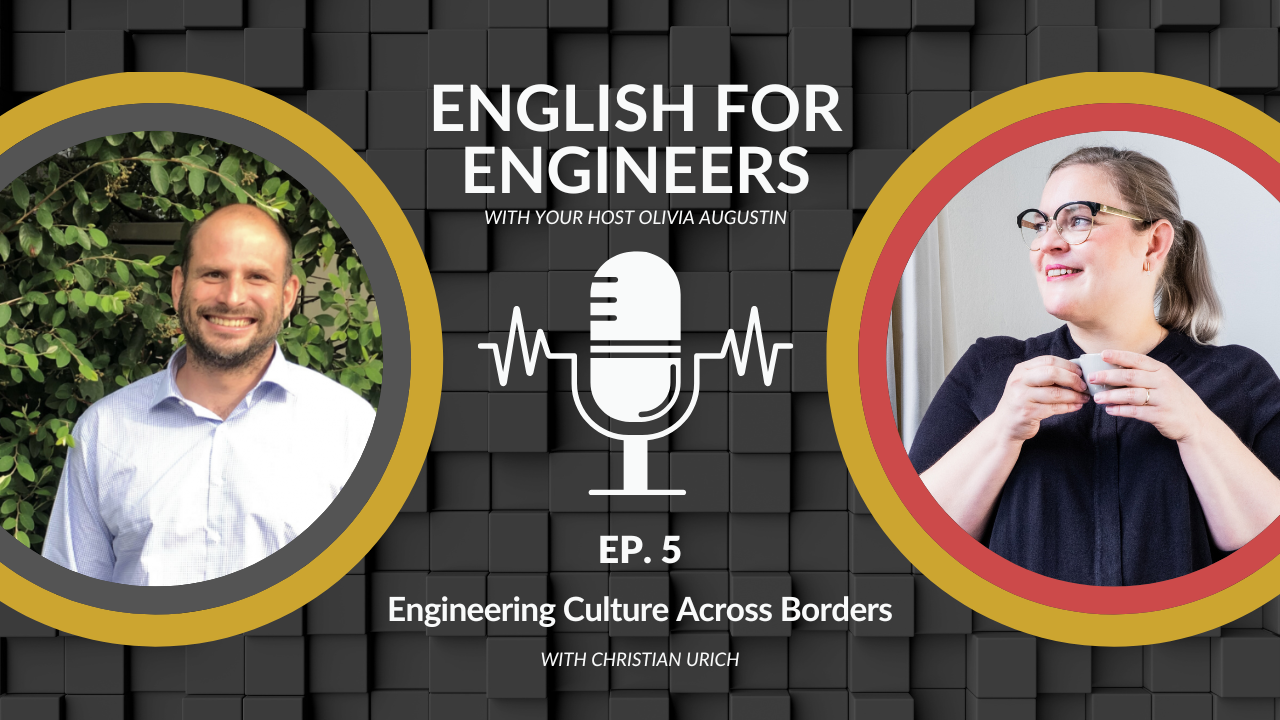
In this episode of English for Engineers, I catch up with an old schoolmate, Christian Urich, a civil and environmental engineer now based in Melbourne, Australia, about how engineering culture changes once you cross a border — from the number-heavy calculations of Austrian structural engineering to the report-and-narrative culture of international consulting.
What You'll Learn in This Episode
In Austria, Christian's structural engineering reports started with a cover page and went straight into pages of calculations, some of them done by hand — pages and pages of them, sometimes measured in meters of paper. Numbers and drawings were expected to speak for themselves; nobody taught him to write persuasively, because "you'll have a secretary for that." Once he moved into environmental consulting for clients across Australia, the expectation flipped completely: every report opens with a one-page executive summary, written for whoever actually has to act on it — often a government client who isn't a subject-matter expert and won't read past page one.
It's less about the country and more about company size, Christian says. A four-person Austrian firm and a 20,000-person Australian consultancy work in completely different ways regardless of where they're based. Scrum and Agile — standard on Dutch infrastructure projects — are barely known among the Austrian and German engineers Olivia works with. Christian's own consultancy is starting to use them too, but only for projects where the client doesn't yet know what the end result should look like.
Fewer flights for one-day client meetings, for one thing — something Christian thinks should have happened before the pandemic forced it. But it's also made professional isolation worse. Without the hallway conversations and coffee breaks, junior engineers especially can go long stretches without knowing what other teams in the same company are even working on.
Talk anyway. Christian's own English "wasn't the greatest either," and what he's found is that people are far more forgiving than engineers expect — colleagues will piece together a broken sentence faster than they'll forgive silence. His advice: don't apologize for your English, and don't let staying quiet be the worst thing you do in a meeting.
The English for Engineers podcast is here to help engineers and technicians from all backgrounds improve their communication skills and provide them with interesting facts so that Technical and Business English becomes their new superpower.
RESOURCES AND LINKS
- How to Write a Report (and Present It Too) — the eBook version of the one-page executive summary structure Christian describes, built for engineers who'd rather follow a recipe than write a novel.
- Why Engineers Sound Less Confident in English Than They Are — more on the mindset behind Christian's closing advice: don't apologize for your English.
- Catch up with English for Engineers Lost in Translation: How Culture Shapes Business Communication for more on how culture — not just vocabulary — shapes whether you're understood.
- Technical English — the Fast and Furious Edition — if executive summaries and stakeholder reports are where your English needs the most work.
CONNECT WITH CHRISTIAN URICH
Christian Urich is a civil and environmental engineer based in Melbourne, Australia. He spent years researching water-sensitive cities and teaching groundwater modelling at Monash University before moving into environmental engineering consulting, where his projects now range from water policy work with governments to AI-driven irrigation systems.
LinkedIn: Christian Urich
CONNECT WITH OLIVIA AUGUSTIN
Olivia Augustin is a civil engineer and certified English as a second language teacher. With her one-on-one lessons and group courses, she teaches non-native English-speaking engineers the kind of English that gets the job done.
0 Comments