

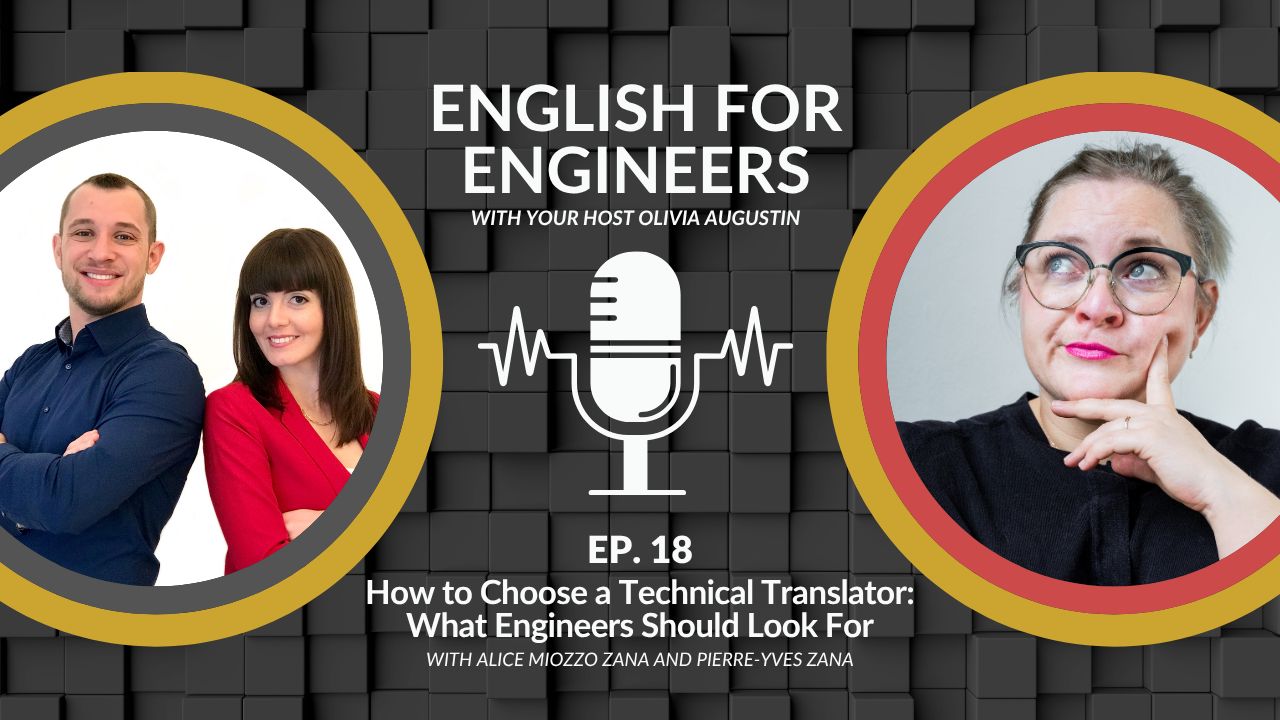
Your specification goes out for translation. It comes back in French. You cannot check it, so you sign it off and hope.
That is the position most engineers are in. This episode is about how to choose a technical translator so you are not just hoping.
My guests are Alice Miozzo Zana and Pierre-Yves Zana, a French-Italian couple who translate together under the brand TradZana in Verona. Alice studied foreign languages and holds a Master's in specialized translation. Pierre-Yves has a Master of Science in electrical engineering. He worked as an engineer at Bosch for four years, then switched to translation in 2015.
That combination is rare. It also changes what you get.
What You'll Learn in This Episode
It lets the translator read the subtext. Pierre-Yves gives the example of a source text that confused power with current. He spotted it because he is an electrical engineer. A translator without that background would have translated the error faithfully into the target language. You pay for a translation, and you get a technical review as well.
Alice and Pierre-Yves say no, and their reasoning is practical rather than sentimental. Technical text needs deep comprehension. The machine renders the words. It does not know that the sentence in front of it is wrong. If nobody understands the system being described, nobody catches the mistake.
Big agencies often work from a large database of freelancers, according to my podcast guest. If your usual translator is busy, you get the next one. If the deadline is tight, they split your document across several people. A small office gives you the same translator every time, so your terminology stays consistent. You also get a real conversation instead of an email chain.
Three questions get you most of the way.
Ask what the translator did before translation. Pierre-Yves has a Master of Science in electrical engineering and four years in the field. That is why he caught a source text that confused power with current. Language skill alone does not catch that.
Ask which language they translate into. Alice works into Italian, Pierre-Yves into French. Each one writes only in the language they grew up in, and they check each other's work. Your document gets a native speaker on both ends.
Ask what happens if they are busy. A small office gives you the same person every time. That is where your consistent terminology comes from.
More than engineers expect. In Italian, the formal pronoun sounds very formal, so informal sits closer to the default. In French, the formal pronoun is the default with anyone you do not know. The switch also runs one way only. Once you have gone informal with someone, going back to formal is almost impossible.
I have my own version of this from the Netherlands. I used the informal form with my elderly neighbours for six months. My grammar was correct. My manners were not. When I finally switched to formal, they told me to go back — by then we knew each other.
Alice adds the flip side. Too much formality holds distance in place, and that distance costs you the easy working relationship you actually want. She finds Italian emails easier to write than French ones, even though Italian is her language and French is her husband's.
Resources and Links
More on this topic from English for Engineers
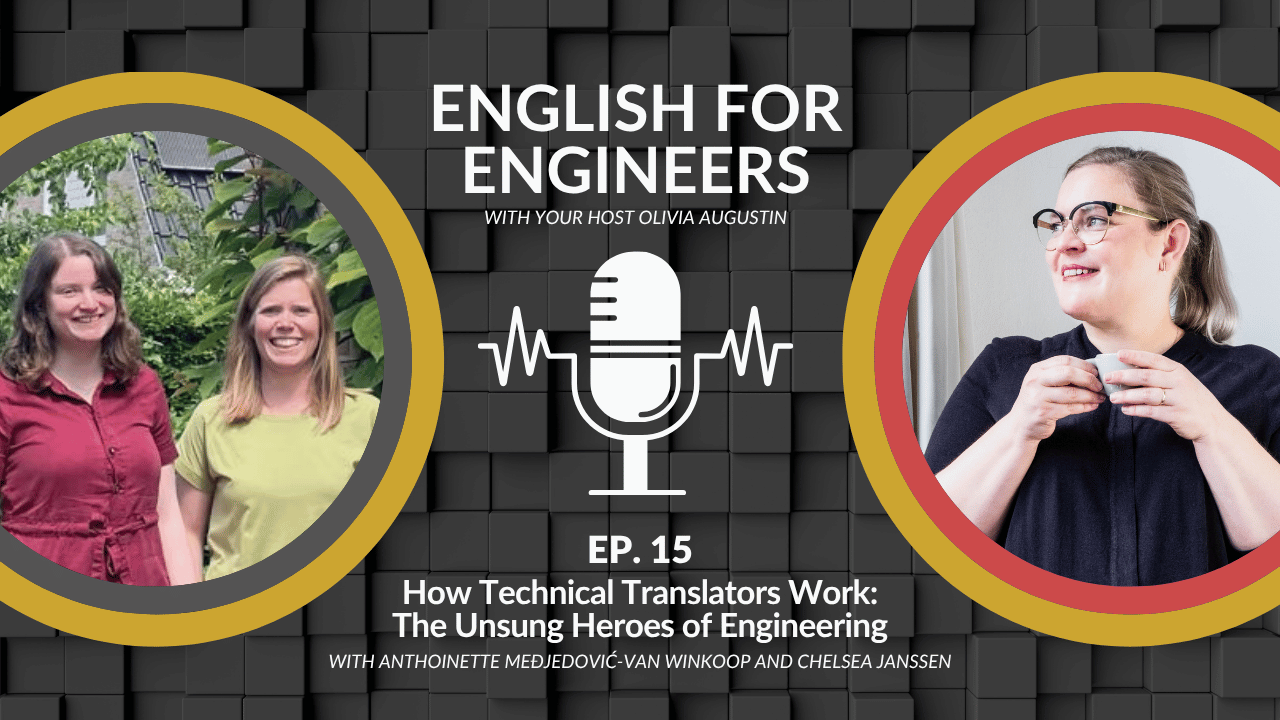
- How Technical Translators Work: The Unsung Heroes of Engineering — what the job involves day to day
- What Engineers Can Learn From Professional Translators — the four-eyes principle, applied to your own writing
- How Engineering Communication Styles Differ Around the World
Free for you
Connect with Alice and Pierre-Yves
Website | Alice on LinkedIn | Pierre-Yves on LinkedIn | Instagram
Connect with Olivia Augustin
Olivia Augustin is a civil engineer and certified English as a second language teacher. With her one-on-one lessons and group courses, she teaches non-native English-speaking engineers the kind of English that gets the job done.
0 Comments